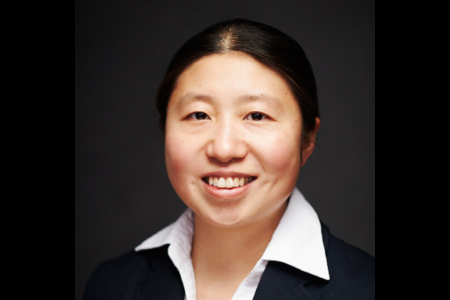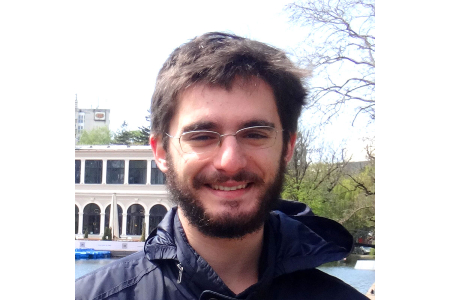
No dia 7 de outubro, Tiago Azevedo, investigador associado no Department of Computer Science and Technology e research fellow da Hughes Hall, da University of Cambridge, é convidado das DEI Talks e apresentará “Graph-Based Approaches to Biological Systems: Applications in Neuroimaging and Molecular Networks”. A sessão acontecerá na sala B006, às 14:30, e terá a moderação do Prof. Rosaldo Rossetti (DEI).
Alumnus do DEI-FEUP, concluiu o Mestrado Integrado em Engenharia Informática e Computação em 2015, sob a supervisão do Professor Rosaldo Rossetti. Após a sua formação no Porto, prosseguiu o percurso académico na Universidade de Cambridge, onde realizou o doutoramento e desenvolve atualmente a sua atividade de investigação. Será uma excelente oportunidade para conhecer o percurso de um antigo estudante do DEI que hoje contribui para o avanço da investigação em inteligência artificial aplicada a alguns dos mais importantes desafios da saúde e da biologia.
Sobre a DEI Talk:
“Biological systems can be represented as networks in which nodes correspond to brain regions, genes, or proteins, and edges capture functional, statistical, or potentially causal relationships. In this talk, I will discuss how graph-based methods can be used to model such systems, focusing first on a deep graph neural network architecture for learning spatio-temporal dynamics from resting-state functional MRI data.
I will then turn to molecular networks, briefly discussing previous work on multilayer modelling of the human transcriptome (i.e., gene expression). The main focus will then be my current work on causal discovery and stability analysis in high-dimensional proteomic data, motivated by Parkinson’s disease. Specifically, I will describe how traditional causal graph estimation and consensus analysis can be used to identify molecular relationships and communities that are robust to variation in the data.”
Sobre o Orador:
“Tiago Azevedo is a research associate at the Department of Computer Science and Technology and a research fellow at Hughes Hall, at the University of Cambridge, where he broadly likes to research applications of artificial intelligence in the medical and biological domains.
His current position, funded under the Sustaining Innovation Postdocs (SIPD) programme by Astex Pharmaceuticals, centres on applying machine learning to better understand Parkinson’s disease. Specifically, uncovering biologically grounded patient subtypes by integrating multi-modal data. Prior to his current focus on Parkinson’s disease, Tiago worked on cancer models using Raman spectroscopy histology data as part of CHARM, one of the first ever European Innovation Council Transition Challenges projects funded by the EU. He also spent over a year as a senior research scientist at Arm, working on efficient probabilistic machine learning and graph neural networks.”