DEI Talks | “Computational Inaesthetics: Expanding the Boundaries of Artistic Research and Computational Aesthetics” by Martinus Suijkerbuijk

“Computational Inaesthetics: Expanding the Boundaries of Artistic Research and Computational Aesthetics” will be presented on Friday, march 24th, at 14:30, room I-105, moderated by Prof. António Coelho from DEI.

By the author:

“The increasing use of digital technologies in artistic practice, coupled with the recent emergence of AI, has led to a growing intersection and mutual influence between two related fields: artistic research and computational aesthetics. Artistic research involves using artistic practices to generate new insights and understandings about the world and reflect critically on the process of creating art. In contrast, computational aesthetics involves the theory, practice, and implementation of aesthetics within the domain of computing, and in its most formal version relies on mathematical and computational methods to generate and evaluate art.

However, there has been criticism of computational aesthetics for failing to account for the subjective and non-algorithmic nature of aesthetic experience. Nonetheless, this presentation proposes a practical framework that seeks to resolve this critique by highlighting an expanded view of computational aesthetics, which the presenter terms Computational Inaesthetics.

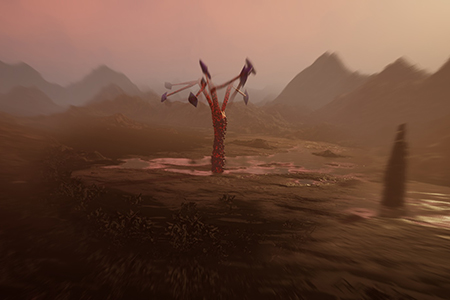
Through the discussion of basic concepts and principles of artistic research and computational aesthetics, and through the analysis of a selection of artworks by the presenter, the presentation explores the ways in which these fields can inform and enhance each other. Furthermore, the presentation provides an overview of the artistic contents and theoretical underpinnings of the presenter’s artistic research PhD project.

Overall, this presentation showcases the exciting potential of bringing together artistic research and computational aesthetics to expand our understanding of aesthetics, art, creativity, and the role of technology and computation in society.”

Martinus Suijkerbuijk is an artist, designer and engineer that currently is working towards completing his artistic research PhD at the Trondheim Academy of Fine Art, Norway. His artistic research is focused on the concept of Computational Aesthetics, which he explores through the use of AI empowered Artificial Aesthetic Agents (AAA) in virtual environments. His diverse background has enabled him to present his research and work at cultural institutions such as ZKM and MetaMorf, as well as technology conferences like CHI 2018 and Philips Trend Event.
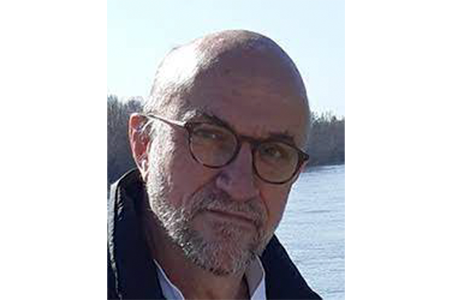
Invited Talks | “Driving Simulators for the Study of Road Users’ Behaviour” by Prof. Stéphane Espié

“Driving Simulators for the Study of Road Users’ Behaviour” will be presented on tuesday, march 7th, at 17:15, room B012.

“To be efficient and accepted, road safety counter-measures need to be defined thanks to scientific studies. The question is not only to imagine an optimal solution in the absolute, but to understand the real practices and, based on this knowledge, to design the measures (sensitivity campaigns, changes in Highway Code, changes in initial training curriculum or licence tests, infrastructure (re)design, vehicles homologations, etc.). In our talk we will describe the tools and methods we promote and refined for decades to improve road safety, and their use in research projects. Our approach is systemic and is based on three pillars: instrumentation of vehicles for in-depth naturalistic studies, traffic modelling and simulation using a multi-agents system, and design of driving simulators to study driving behaviors. We will illustrate our approach using research projects we have conducted over these last years.”

Stéphane ESPIÉ is a Research Director at the Gustave Eiffel University. He holds an Accreditation to Direct Research in Computer Science (HdR, Pierre et Marie Curie University, 2004). His main research areas are behavioral traffic simulation (MAS based), and the design of tools to study road user behaviors (driving/riding simulators and instrumented vehicles). He currently conducts his research in SATIE laboratory (Paris Saclay university) where he leads the MOSS (Methods and Tools for Signals and Systems) research group.

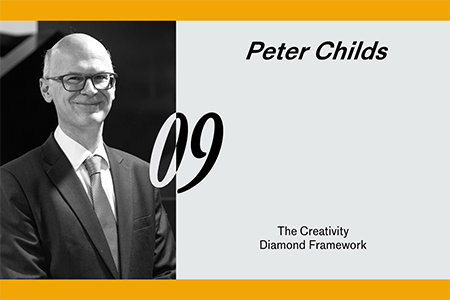
CreativityTalks | “The Creativity Diamond Framework” by Prof. Peter Childs

There are many facets to creativity, and the topic has a profound impact on society. Substantial and sustained study on creativity has been undertaken, and much is now known about the fundamentals and how creativity can be augmented. To draw these elements together, a framework has been developed called the creativity diamond, formulated on the basis of reviews of prior work, as well as consideration of 20 PhD studies on the topics of creativity, design, innovation, and product development. The creativity diamond framework can be used to prompt and help select which tool or approach to use in a creative environment for innovative tasks. This presentation will explore some of the principal facets of creativity and describe the creativity diamond framework and associated resources as well as considering the practical realization of ideas.

 “The Creativity Diamond Framework” will be presented by Prof. Peter Childs, on March 2, at 6 pm, online via Youtube

Short-Bio:

Peter Childs is the Professorial Lead in Engineering Design and Co-Director of the Energy Futures Lab at Imperial College London. His general interests include creativity, innovation, design, sustainability and robotics. He was the founding Head of School for the Dyson School of Design Engineering at Imperial. Prior roles include director of the Rolls-Royce supported University Technology Centre for Aero-Thermal Systems, director of InQbate and professor at the University of Sussex. He has contributed to over 200 refereed journal and conference papers, and several books. He has been principal or co-investigator on contracts totalling over £100 million. He is a fellow of the Royal Academy of Engineering, Editor of the Journal of Power and Energy, Professor of Excellence at MD-H, Berlin, Advisor Professor at Guangdong University of Technology, Chairperson at BladeBUG Ltd and Founder Director and Chairperson at QBot Ltd.

ProDEI Symposium coming soon

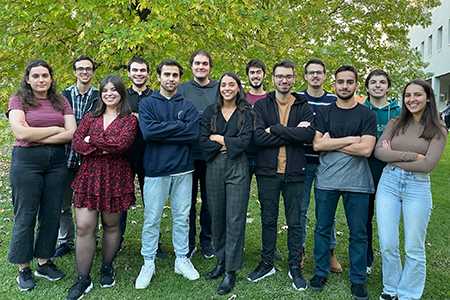
Coming soon, February 8, B032 hosts the ProDEI Symposium, formerly known as DSIE, annual meeting of the community of the PhD Program in Computer Engineering at FEUP, organized by its students.

This edition will demonstrate throughout the day the potential and opportunities of a PhD as a career path, through the testimonies of former ProDEI students with successful careers in industry: João Pedro Dias from BUILT CoLAB, João Reis from DEUS.ai and Tiago Boldt from Kevel. We will learn the different visions of those working simultaneously in industry and academia and how the challenging path of a PhD culminates in better and more rewarding opportunities.

Mid-morning, the interventions of Eugénio Oliveira, Emeritus Professor of the DEI, and Diana Santos, from the Innovation Office of FEUP, will present funding opportunities for those doing a PhD and the details of the application process, and will be available to clarify any questions.

After lunch, Luís Paulo Reis, LIACC Director, will present the talk “There are more tides than sailors: A reflection on the importance of doing top-quality scientific research!” This talk will focus on the recent developments in the areas of CS, AI, ML, IR and PNL and the importance of developing excellent science and advanced research in these areas, in the context of a successful and impactful PhD to achieve a top position in a top international technology company.

This will be followed by presentations from current ProDEI students that in 10 minutes each will give us a presentation of their latest research work in the areas of Artificial Intelligence, Software Engineering, Information Systems, (…) , being moderated by Professors Carlos Soares and António Augusto Sousa.

The session will end with a social coffee break among the participants.

Registrations are free and can be submitted here until February 7th.

DEI Talks | ”AutoML and Meta-learning for Neural Network Robustness Verification” by Prof. Jan N. van Rijn, Leiden Institute of Advanced Computer Science

“Jan N. van Rijn holds a tenured position as assistant professor at Leiden University (ada.liacs.nl), where he works in the computer science department (LIACS) and Automated Design of Algorithms cluster (ADA).

His research interests include artificial intelligence, automated machine learning (AutoML) and meta-learning.

He obtained his PhD in Computer Science in 2016 at Leiden Institute of Advanced Computer Science (LIACS), Leiden University (the Netherlands).

During his PhD, he developed OpenML.org, an open science platform for machine learning, enabling sharing of machine learning results.

He made several funded research visits to the University of Waikato (New Zealand) and the University of Porto (Portugal).

After obtaining his PhD, he worked as a postdoctoral researcher in the Machine Learning lab at the University of Freiburg (Germany), headed by Prof. Dr. Frank Hutter, after which he moved to work as a postdoctoral researcher at Columbia University in the City of New York (USA). His research aim is to democratize access to machine learning and artificial intelligence across societal institutions, by developing knowledge and tools that support domain experts.

He is one of the authors of the book `Metalearning: Applications to Automated Machine Learning and Data Mining’ (published by Springer).”

”AutoML and Meta-learning for Neural Network Robustness Verification” will be presented january the 25th, at 14:45, room B006 – free entrance, all are welcome.

Abstract: Artificial intelligence is being increasingly integrated in modern society, with applications ranging from self-driving cars to medicine development. However, artificial intelligence models (in particular neural networks) have been notoriously known for being susceptible for various forms of attacks, including adversarial attacks. In a bid to make these models more trustworthy, the field of neural network robustness verification aims to determine to which degree a given network is susceptible to such an attack. This is a very time consuming task, that can greatly benefit from the various advances that the Automated Machine Learning and meta-learning community have made.

In this talk, it will be explained the basis of automated machine learning and meta-learning, and the speaker will talk about their research on applying this to robustness verification. He will also explain how the community can further engage in this endevour towards trustworthy artificial intelligence.

Talk a Bit is back for its 11th edition

Talk a Bit is back on January 28th (Saturday), at the FEUP Auditorium, for its 11th edition.

The conference is organized annually by the final year students of the Master in Informatics and Computing Engineering of FEUP and is well known for the quality of its programme and the high number of participants.

This year’s theme will revolve around data, “Data. How it’s created, how it’s stored, how it’s streamed, how it’s processed” and will feature a number of experts who will bring a lot of material to be explored and discussed.

The event programme aims to promote learning, the discussion of ideas and social moments and among the list of speakers we can see João Silveira from Microsoft, Sónia Liquito from Spotify, João Gonçalves and José Costa from Critical Techworks, João Carvalho from Tandhem Esports, Liliana Ferreira from Fraunhofer Portugal AICOS, Pedro Dias and Marco Sousa from Zero Zero, Tiago Matos from Jumpseller, (…), who will for sure contribute to another successful edition.

Pre-event (24 to 26 January), an hackaton will be hosted with great prizes for the winners.

All the information and the registration link can be seen here.

DEI Talks | “Clustering Healthcare Data” by Prof. Pasi Fränti

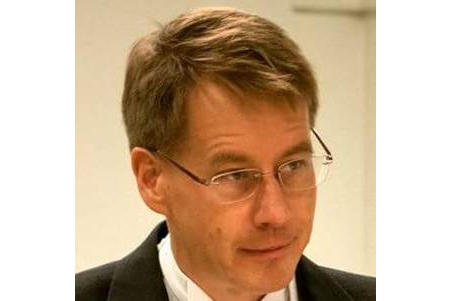
Pasi Fränti received his MSc and PhD degrees from the University of Turku, in 1991 and 1994 in Science. Since 2000, he has been a professor of Computer Science at the University of Eastern Finland. He has published in 99 journals and 175 peer review conference papers. Pasi Fränti is the head of the Machine Learning research group. His current research interests include clustering algorithms, location-based services, machine learning, web and text mining, and optimization of health care services. He has supervised 30 PhD graduates and is currently supervising nine more.

 “Clustering Healthcare Data” will be presented November 7, at 11:00, in room I125 – participation is  free, all are welcome.

 Abstract: Clustering can a powerful tool in analyzing healthcare data. We show how clustering based on k-means and its variants can be used to extract new insight from various data with the aim to better optimize the health care system. We first show that simple variants of k-means and random swap algorithms can provide highly accurate clustering results. We demonstrate how k-means can be applied to categorical data, sets, and graphs. We model health care records of individual patients as a set of diagnoses. These can be used to cluster patients, and also create co-occurence graph of diagnoses depending on how often the same pair of diseases are diagnosed in the record of the same patient. Taking into account the order of the diagnoses, we can construct a predictor for the likely forthcoming diseases. We also provide a clustering algorithm to optimize the location of health care systems based on patient locations. As a case study, we consider coronary heart disease patients and analyze in what way the optimization of the locations can affect the expected time to reach the hospital within the given time. All the results can provide additional statistical information to healthcare planners and also medical doctors at the operational level to guide their efforts to provide better healthcare services.

Informatics Week [31-2]

The Informatics Week (SINF), organized by Núcleo de Informática da Associação de Estudantes da Faculdade de Engenharia da Universidade do Porto (NIAEFEUP), was created with the purpose of allowing students, regardless of their program, to develop skills in several areas of Informatics, promoting their interaction with the business world through social events.

The 2022 edition will take place between October 31st and November 2nd with numerous activities, including lectures and workshops, that will allow participants to get in touch with several technologies and concepts that are not part of the academic program, therefore focusing on technical skills, as well as a pitch, interview sessions and visits to companies, fostering their contact with top national and international companies.

This year the themes of Cybersecurity and Gaming and Interactivity will be in focus and all activities can be seen on the event’s website.

DEI Talks | “Tools and methods for the understanding of road users behaviours” by Prof. Stéphane Espié and “Driving-Pattern Identification and Event Detection Based on an Unsupervised Learning Framework: Case of a Motorcycle-Riding Simulator” by Prof. Abderrahmane Boubezoul

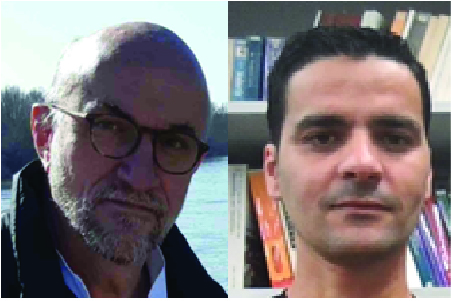
Within the framework of the European University Alliance for Global Health (EUGLOH), we are glad to host the visit of Stéphane Espié and Abderrahmane Boubezoul, visiting DEI during this week (17-21).

Our guests will deliver two seminars on Friday, October 21, at 9:00, in Room B 009. You are all invited!

 “Tools and methods for the understanding of road users behaviours”

By the Author:

“To be efficient and accepted, road safety counter-measures need to be defined thanks to scientific studies. The question is not only to imagine an optimal solution in the absolute, but to understand the real practices and, based on this knowledge, to design the measures (sensitivity campaigns, changes in Highway Code, changes in initial training curriculum or licence tests, infrastructure (re)design, vehicles homologations, etc.).

In our talk we will describe the tools and methods we promote and refined for decades to improve road safety, and their use in research projects. Our approach is systemic and is based on three pillars: instrumentation of vehicles for in-depth naturalistic studies, traffic modelling and simulation using a multi-agents system, and design of driving simulators to study driving behaviours. We will illustrate our approach using research projects we have conducted over these last years.

Stéphane ESPIÉ is a research director at the Gustave Eiffel University. He holds an Accreditation to Direct Research in Computer Science (HdR, Pierre et Marie Curie University, 2004). His main research areas are behavioural traffic simulation (MAS based), and the design of tools to study road user behaviours (driving/riding simulators and instrumented vehicles). He currently conducts his research in SATIE laboratory (Paris Saclay university) where he leads the MOSS (Methods and Tools for Signals and Systems) research group.

“Driving-Pattern Identification and Event Detection Based on an Un-supervised Learning Framework: Case of a Motorcycle-Riding Simulator”

By the Author:

“Analysis of human driving behavior aims to inspect drivers’ behavior in the real-world and in a virtual environment. The study of driving behaviors can be conducted in naturalistic situations or controlled experiments. Analyzing driving behaviors based on the data collected in naturalistic driving experiments or controlled experiments in the real-world or in a virtual environment is beneficial to fill in many of the knowledge gaps about driving behaviors and risk factors. I will present a multi-step framework for analyzing driving behavior on macroscopic and microscopic scales. The core step of this framework is based on unsupervised machine learning algorithms applied to driving-pattern identification and the detection of critical driving events using anomaly-detection algorithms. The detected events are interpreted and described by computing their feature importance using graphs centrality measures. This provides new insight into driving behavior by identifying the motives behind the driver’s actions.

Abderrahmane Boubezoul received his Ph.D. in Computer Science and Mathematics from University Paul Cézanne (Aix-Marseille III), France in 2008 and his Master’s degree in Virtual Reality and Complex Systems from Evry Val d’Essone University, France. Since 2008, he is a researcher at Gustave Eiffel University. His current work is about statistical signal processing and machine learning applied to road transport systems. He currently conducts his research in SATIE laboratory (Paris Saclay university) MOSS (Methods and Tools for Signals and Systems) research group.

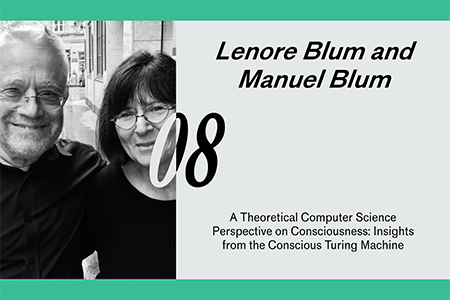
Creativity Talks 08 – “A Theoretical Computer Science Perspective on Consciousness: Insights from the Conscious Turing Machine” by Lenore and Manuel Blum

The eighth session of the Creativity Talks will have as keynote speakers the distinguished Professors at Carnegie Mellon School of Computer Science Lenore Blum and Manuel Blum.

Lenore and Manuel Blum, recipients of the PAESMEM and Turing awards, respectively, will present at FEUP “A Theoretical Computer Science Perspective on Consciousness: Insights from the Conscious Turing Machine” on September 29, at 18:00, in Room B032, and also streamed online via Youtube.

“We are Theoretical Computer Scientists. Theoretical Computer Science is a subarea of Mathematics that has tools, we claim, ideally suited to understanding consciousness. We have applied these tools to produce a model of consciousness that we call the Conscious Turing Machine (CTM). Our model gives insight into what goes on in our head to cause us to feel conscious. It also suggests how machines may be constructed to be conscious.

A Turing Machine (TM) is a very simple device defined mathematically by Alan Turing. There is no way that anyone would or should consider a TM to be conscious. However, with the advent of fMRI in 1990, advances in Neuroscience, and the Global Neuronal Workspace Models of Baars, Changeaux, and Dehaene, we have defined a variant of TM, the CTM, that we argue gives insight into consciousness.

Lenore will present and explain our model of consciousness, the CTM. Manuel will discuss how and why the CTM experiences feelings of consciousness”, shares Prof. Blum.

To attend the lecture at the Faculty of Engineering of the University of Porto, please register HERE! Participation at the event is free of charge, but registration is compulsory. Online participation does not require any registration.

Talk link: https://youtu.be/V7BunRG_9-A

Lenore Blum has been passionate about mathematics since she was 10. She attributes that to having dropped out of school when she was 9 to wander the world, then hit the ground running when she returned and became fascinated with the Euclidean Algorithm. Her interests turned to non-standard models of mathematics, and of computation. As a graduate student at MIT, she showed how to use saturated model theory to get new results in differential algebra. Later, with Mike Shub and Steve Smale, she developed a foundational theory for computing and complexity over continuous domains such as the real or complex numbers. The theory generalizes the Turing-based theory (for discrete domains) and has been fundamental for computational mathematics. Lenore is internationally known for her work in increasing the participation of girls and women in STEM and is proud that CMU has gender parity in its undergraduate CS program. Lenore is currently president of the Association for Mathematical Consciousness Science. Lenore Blum: lblum@cs.cmu.edu

Manuel Blum has been motivated to understand the mind/body problem since he was in second grade when his teacher told his mom she should not expect him to get past high school. As an undergrad at MIT, he spent a year studying Freud and then apprenticed himself to the great anti-Freud neurophysiologist Warren S. McCulloch, who became his intellectual mentor. When he told Warren (McCulloch) and Walter (Pitts) that he wanted to study consciousness, he was told in no uncertain terms that he was verboten to do so – and why. As a graduate student, he asked and got Marvin Minsky to be his thesis advisor. Manuel is one of the founders of complexity theory, a Turing Award winner, and has mentored many in the field who have chartered new directions ranging from computational learning, cryptography, zero knowledge, interactive proofs, proof checkers, and human computation. Manuel Blum: mblum@cs.cmu.edu